The Journalism + Design Lab invests in people already doing the work of informing their communities, and those who want to.
We activate community colleges and other trusted civic institutions as local news infrastructure.
Building these connections will transform the way local news is produced, shared, and acted upon.

What we do
In partnership with community colleges, local newsrooms, and other trusted anchor institutions, the J+D Lab co-designs:
- Accessible journalism trainings offered at community colleges and arts centers around the country, such as noncredit certificate programs and news product design;
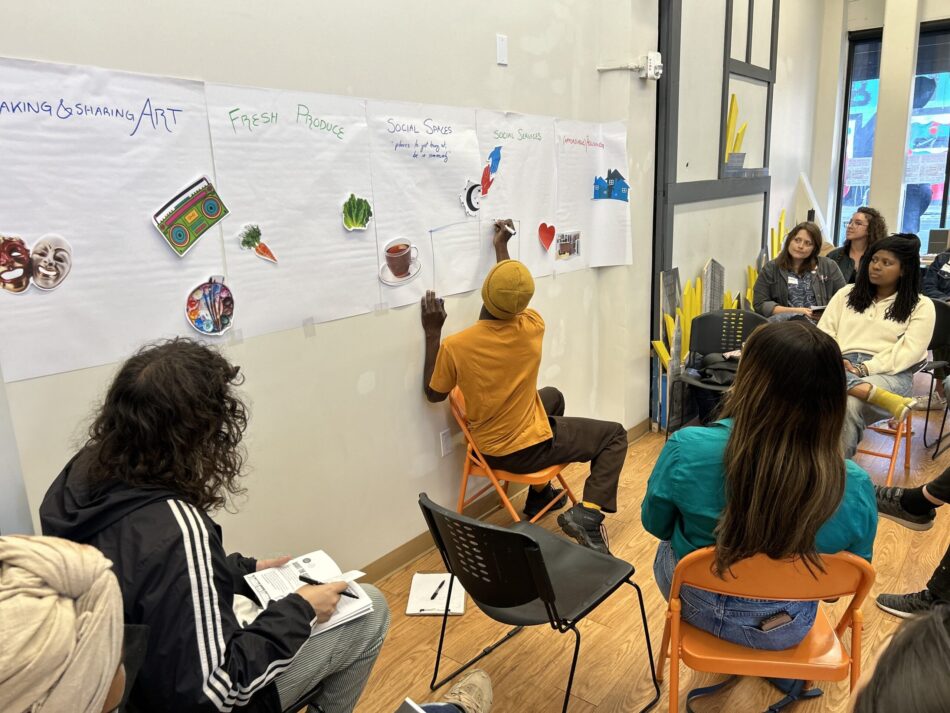
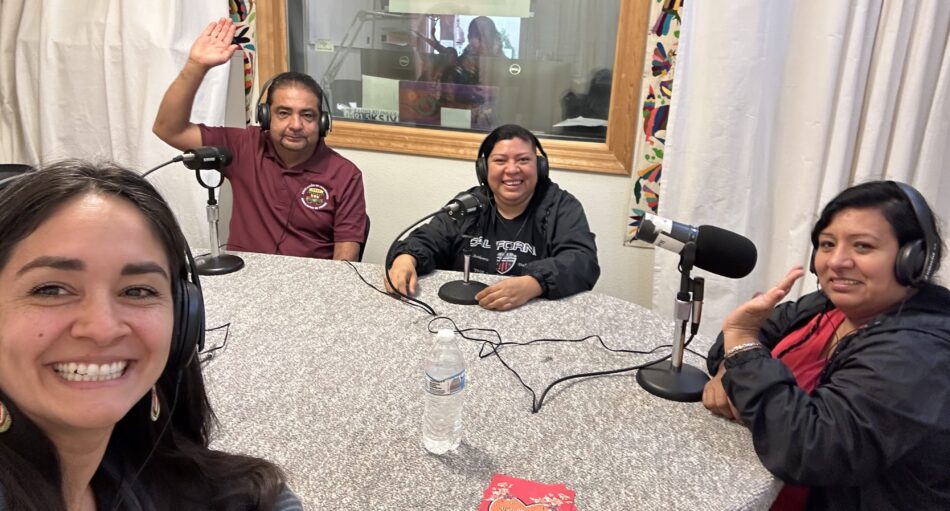
- Innovative opportunities for community members to apply journalistic skills in direct ways, such as acting as “ambassadors” between newsrooms and their communities; hosting neighborhood conversations; producing local podcasts and Facebook groups; and participating in community fellowships at local news organizations;
- Unexpected spaces for people to come together to produce, discuss, and act on the news, such as the Oakland Lowdown, our community art and news hub in downtown Oakland.
Why Community Colleges?
Reach
There are more than one thousand community colleges across the country. They largely serve populations ignored by traditional news organizations, including people who are first in their family to go to college, born in other countries, Black, Hispanic, Native American, and low-income; working parents make up an unusually high percentage of students.
Roots
Community colleges often act as vital community hubs. In rural areas they may be the only institutions offering crucial services; in urban areas they may focus on poverty or unemployment. Community colleges provide a myriad of opportunities that acknowledge and meet residents’ needs, such as leadership training, English as a second language, and health services. Many community colleges operate or host local radio and TV stations, along with a variety of student media. In addition, the people serving and being served by community colleges are not temporary geographic transplants—only dropping in for four years—but tend to be invested, local residents.
Reputation
Americans’ trust in civic institutions of all kinds is waning. One exception: community colleges. A recent Gallup report shows community colleges remain trusted by nearly half of Americans. They also tend to enjoy bi-partisan support in Congress and the Senate.
What it looks like
With Fresno City College and nonprofit newsroom Fresnoland, we created paid fellowships for community members to develop creative ways to increase the flow of reliable news and information in their neighborhoods. One fellow organized street vendors, translating and explaining a proposed city policy that would impact their business. She went on to help the vendors communicate their perspectives on the ordinance to city council members.
In Cleveland, Ohio, we partnered with Cuyahoga Community College, Neighborhood Media Foundation and nonprofit newsroom Signal Cleveland to create a community listening fellowship, training and paying participants to interview hundreds of Clevelanders about the upcoming election. The fellows shared the insights they gathered with local newsrooms to inform coverage, and they answered community questions about voting at Cuyahoga Community College access centers.
In New Jersey, Professor Holly Johnson launched the Community Journalism J Lab at Mercer County Community College, training residents to cover underreported local issues and distribute them through the College VOICE, the school’s student newspaper, and other local media partners, like MercerMe.
Our Network
Our work is based on the premise that strong connections between newsrooms, civic institutions, and local communities are necessary. The Community News Network initiative launched in 2021, with a noncredit certificate program at the Community College of Philadelphia called “Community Journalism for Civic Power.”
Partners
Today, we have partnerships with more than twelve community colleges in five states: California, New Jersey, North Carolina, Ohio, and Pennsylvania. Our partner colleges include Cuyahoga Community College, Fresno City College, and the Community College of Philadelphia. By summer 2026, we expect the number of partner colleges to nearly double, thanks to growth in these states and new programs in New Mexico and the South.
Our local news partners include Resolve Philly, El Tímpano, Signal Cleveland, and Fresnoland, among others. We also, increasingly, strive to include public libraries, arts organizations, and other trusted civic players.
In addition, we partner with local, state and regional funders; and support organizations such as the New Jersey Council for the Humanities, the New Mexico Local News Fund, Documenters, the Neighborhood Media Foundation, and the North Carolina Local News Lab Fund. Such local organizations contribute critical on-the-ground knowledge, as well as help to build the deep-tissue connections that will sustain these programs in the future.
WHo Participates
Participants in our programs include recent immigrants, people who’ve lived and worked in the same small town for decades, a mother-daughter reporting duo, community organizers, senior citizens, and high school students.
These trusted messengers have taken our community journalism trainings, learned news design skills, acted as conduits between their communities and local newsrooms, held fellowships in local newsrooms, participated in community news events, started their own local media channels, and freelanced at local news outlets.
IMPACT
We look at our impact through a mix of quantitative and qualitative outcomes. We consider the scale of people we reach and serve, the number of partnerships we build, and the local programs we co-design. But we’re also interested in how people who participate in our programs go on to contribute to the flow of reliable news, sometimes in unexpected, hard-to-quantify ways.
The numbers:
- Partnered with 12 community colleges in five states to co-design local journalism trainings and programs;
- Provided journalism training to more than 200 community members;
- Distributed more than $300,000 to support programs and partnerships with community colleges and local newsrooms;
- Created 18 “listening” fellowships at local newsrooms;
- Opened one arts and news center, The Oakland Lowdown
A few stories:
- Tina Williams, who went through our community journalism program at Sussex County Community College, went on to create a Facebook page to connect and inform local seniors;
- Louis Lyons, a “listening fellow” from our program in Cleveland, helped organize neighbors to fill the local news gap left by their soon-to-close community newspaper;
- Ariana Martinez-Lott was a fellow in our Fresno program. She got interested in a new policy put forth by Fresno’s city council to regulate street vending: she explained to the vendors how the rules would affect them, and connected the vendors with city council members to share their firsthand experience;
- Josiah Poynter, a Fresno fellow and editor of Fresno Community College’s student newspaper, The Rampage, reported on Fresno’s unhoused community and dedicated the paper’s December 2024 issue to the topic.
Other people in our network have launched YouTube channels, become regular freelancers at local publications, hosted neighborhood conversations about upcoming elections, and answered neighborhood questions about changes to voting stations caused by redistricting.
Programs
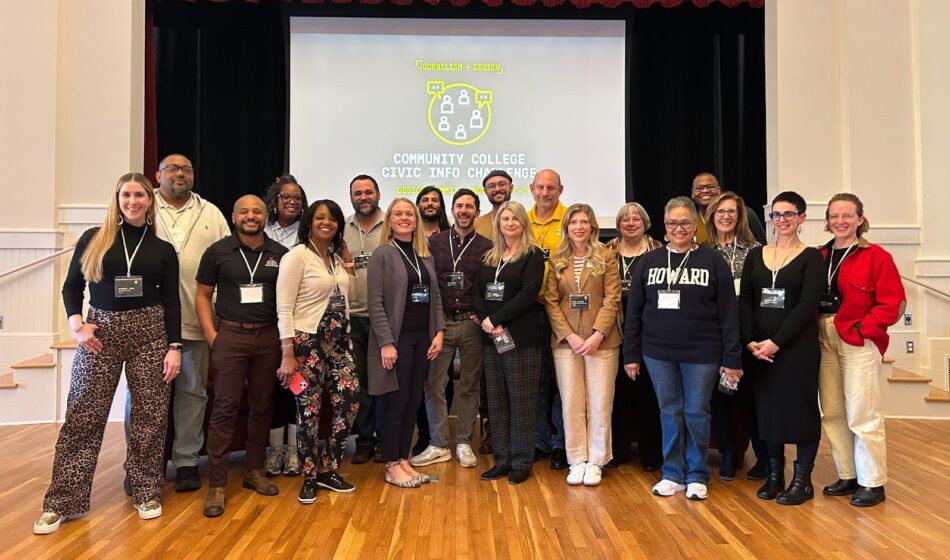
Community College Civic Info Challenge
Asking Southern community colleges for bold ideas to equip more people to get, share, and discuss reliable information about what’s happening where they live
Community News Transformation Grants
Partnering with New Mexico Local News Fund to support community college-based projects that improve the flow of reliable news and information in their surrounding communities
Community Journalism Certificates
Supporting community colleges in hosting noncredit programs enabling more people to participate in local news.
Third Spaces for Local News
Fueling physical hubs for people to produce and share reliable news and information.
Recent News
What we learned from a community college civic info convening in Asheville
How community journalism strengthened a Fresno leader’s organizing skills
Resources
Looking for our educational resources on community journalism?
Explore our Resources for Teaching Journalism for exercises, assignments, syllabi and more.