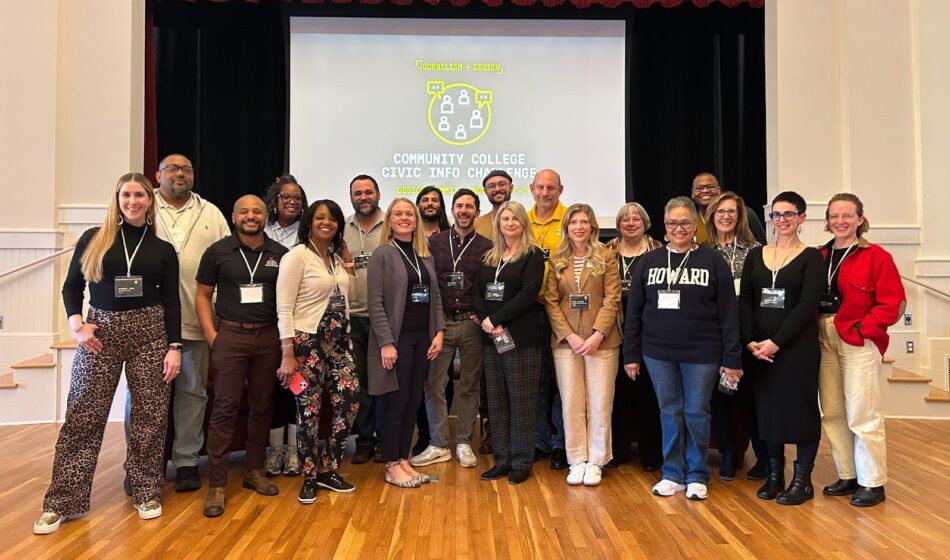
Sitting solo in a hotel conference room in downtown Asheville, I was happy to be unwinding after a busy two days of rich conversation and connection. Our team at the Journalism + Design Lab had just wrapped the Community College Civic Info Challenge Design Summit, an event that drew educators, journalists, media leaders, and community weavers from around the country to connect, dream, and support one another in thinking about how community colleges could be hubs for local news.
In the event afterglow, we were all feeling inspired and proud. But we were also eager to get home. And then I got the notification.
Ping! Your flight has been cancelled.
Unfortunately, we’d gotten caught in the middle of the Trump administration’s call to restrict flights at multiple airports across the country amid the ongoing government shutdown last fall, and it wasn’t clear when we’d be able to get flights out.
What I didn’t expect, as I stared at my phone taking in the news, was that my despair would soon be replaced by something equally beautiful:
A pop-up community info hub.
One by one, other Summit guests whose flights out of Asheville had been cancelled–and there were plenty of us–started gathering in that hotel conference room. Everyone worked their phones and laptops, gathering and sharing up-to-date information about alternative flights, rental car options, and hotel room rates. People passed around snacks and water. We used text and email chains to share the info we had with people who weren’t physically in the room. We entertained one another with stories of past air travel horrors.
Now, I wouldn’t wish travel delays on anyone. But I like to think it’s poetic justice that our event ended the way it did. Faced with a need, we came together as a community and shared information, resources, and stories that helped our crew all find alternative travel options by the end of the night. We created a micro version of what the eight community colleges in the J+D Lab’s Civic Info Challenge cohort are doing every day: creating new spaces and opportunities for more people to get, share, and discuss reliable information that they need to navigate their lives.
We’re thrilled to share more about the work of those cohort colleges and what happened during those two days in Asheville in our new report, “Community College Civic Info Challenge: Takeaways from an interactive design summit.” In it, you’ll find details about our Civic Info Challenge cohort and how they are designing programs that center community information needs, key questions they’re asking, and critical lessons from Western North Carolina partners and colleagues.
We also detail five key takeaways that emerged from our conversations at the summit, which we’ve summarized below:
- Prioritize service-driven programs that center community needs over content production. Community colleges should design journalism programs that center listening, community care, and civic impact—treating students and residents not just as content producers, but active participants in how news and information flows in their communities.
- Build journalism programs with the real-world conditions, constraints, and opportunities of community colleges in mind. Effective community journalism programs must account for community colleges’ unique structures by securing early leadership support, breaking down silos, and leveraging existing campus resources to overcome institutional barriers.
- Design curricula that position journalism as an essential “survival skill” for navigating today’s information landscape. Journalism education should emphasize adaptable, process-driven “survival skills” like critical thinking, listening, and community-centered reporting that can be applied beyond traditional media careers.
- Strengthen trust by embedding community engagement and collaboration into every aspect of the work. Slow, intentional community engagement—empowering local leaders, embedding listening practices, and ensuring programs are accessible and responsive to diverse community needs–creates more sustainable and authentic programs.
- Reimagine the role of community colleges as key builders and sustainers of local news ecosystems. By fostering civic imagination and collaborative visioning, community colleges can position themselves as innovative hubs that strengthen and reshape how reliable news and information flows.
We’ll continue to document and share the cohort’s emerging program models through the coming academic year, so if there are programs that especially resonate with you, please get in touch and let us know.
As cohort member and Jones College Professor Kelly Atwood mused at the end of the Summit, the event encouraged participants to ask: “how far could you go if there was nothing to stop you?” We hope the report is an inspiration for you to ask the same.